Why Natural Fibres Matter:
Organic Cotton vs Polyester Explained
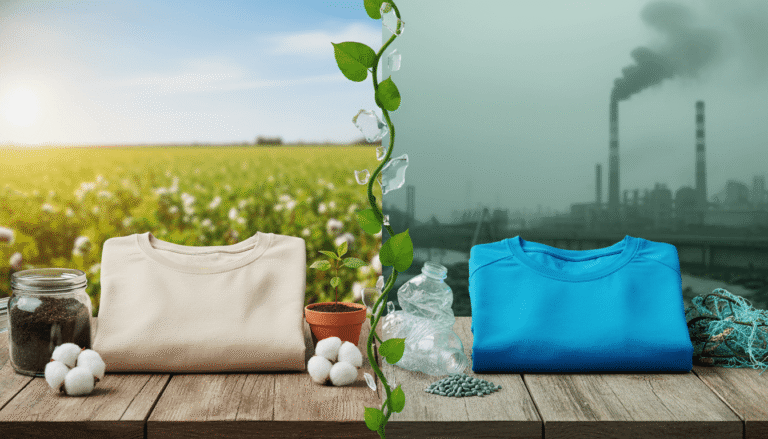
What Are Natural Fibres — and Why Do They Matter?
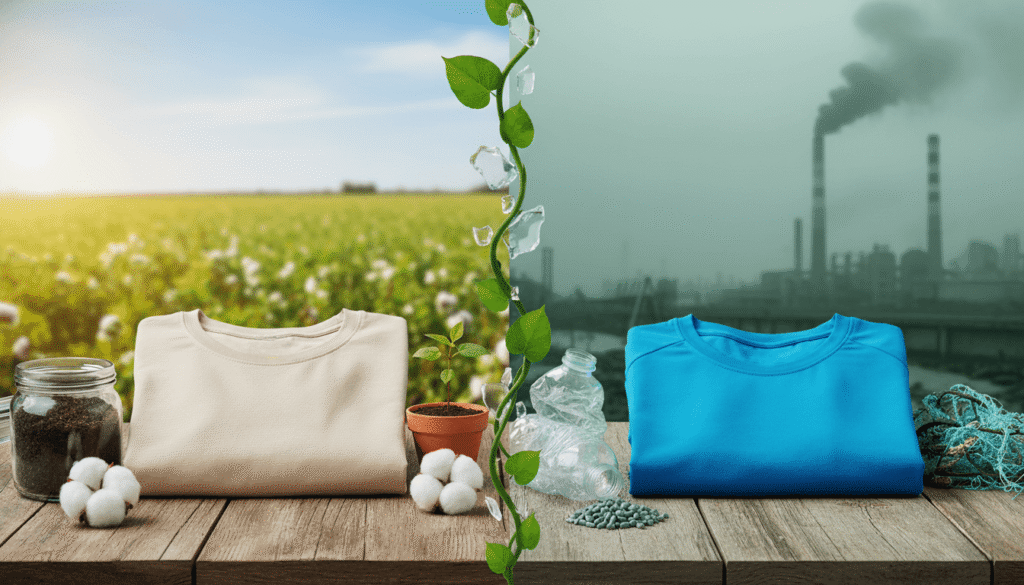
Natural fibres come from plants or animals — cotton, linen, hemp, wool. Unlike synthetics, they exist within biological cycles, meaning they can break down and return to the environment at the end of their life.
That distinction matters more than it first appears.
In modern fashion, fibre choice isn’t just about comfort or appearance — it determines how a garment is produced, how it behaves during use, and what happens when it’s discarded. It’s one of the most fundamental — and most overlooked — decisions in clothing.
Understanding the difference between natural and synthetic fibres isn’t about perfection. It’s about clarity — and making more informed decisions in a system where materials shape everything that follows.
Organic Cotton Explained — From Soil to Shirt
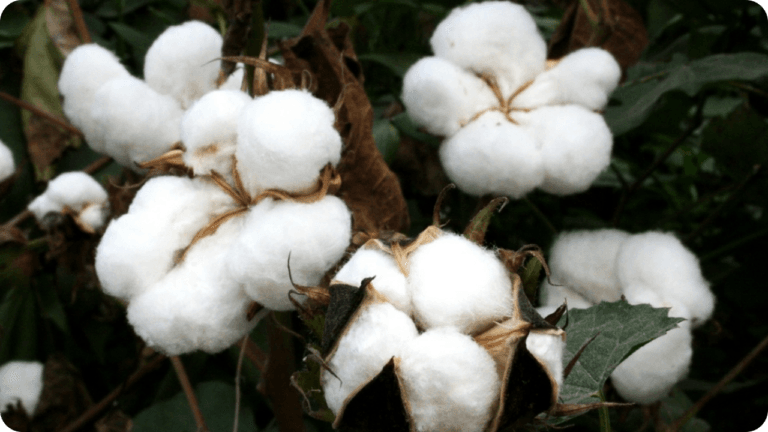
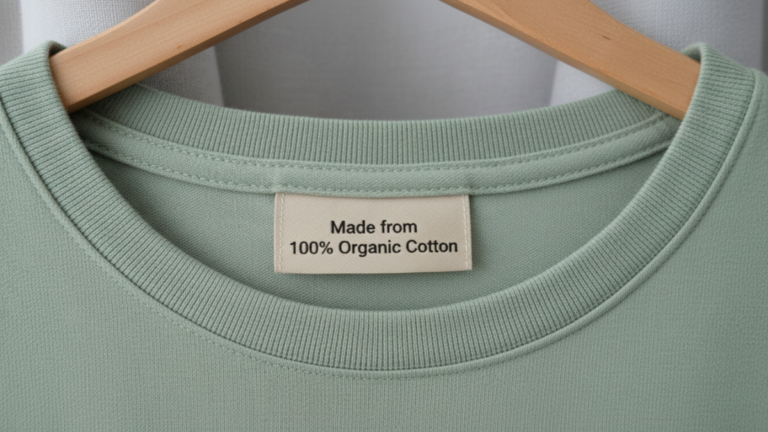
Organic cotton isn’t just “cotton without chemicals.” It represents a different agricultural system — one built around soil health, biodiversity, and long-term resilience rather than short-term yield.
Instead of synthetic inputs, it relies on natural cycles: crop rotation, composting, and biological pest control. The result is a fibre that starts its life with significantly less environmental strain.
Environmental Impact of Organic Cotton
Organic cotton farming:
- Uses less irrigation when supported by rain-fed systems
- Reduces chemical runoff into waterways
- Supports healthier soil ecosystems
- Improves biodiversity at the farm level
These benefits compound over time. Healthier soil retains more water, supports more life, and even plays a role in carbon storage — making organic systems more stable and less resource-intensive overall.
This becomes clearer when compared directly to conventional farming methods, where the environmental trade-offs are far more pronounced, as broken down in the environmental impact of cotton production.
Human Impact and Ethical Considerations
The difference isn’t just environmental.
By removing synthetic pesticides and fertilisers, organic cotton reduces exposure risks for farmers and surrounding communities — aligning with the labour and safety standards that underpin responsible production.
Material choice doesn’t exist in isolation — it feeds into working conditions, transparency, and long-term sustainability, which is why it plays such a central role in how organic cotton supports ethical apparel.
These same principles carry through to the materials and standards behind responsible clothing in Australia, where fibre choices are backed by clear production benchmarks.
Polyester Explained — Performance at a Cost

Polyester is often framed as practical: durable, cheap, easy-care.
But at its core, it’s plastic.
Derived from petroleum, polyester is created through energy-intensive chemical processes that convert fossil fuels into synthetic fibres. That origin shapes its entire lifecycle — from production emissions to microplastic pollution to its inability to safely break down.
Production and Resource Use
Creating polyester requires:
- Fossil fuel extraction
- High-temperature chemical processing
- Significant energy input
This makes it inherently carbon-intensive before the garment is even worn.
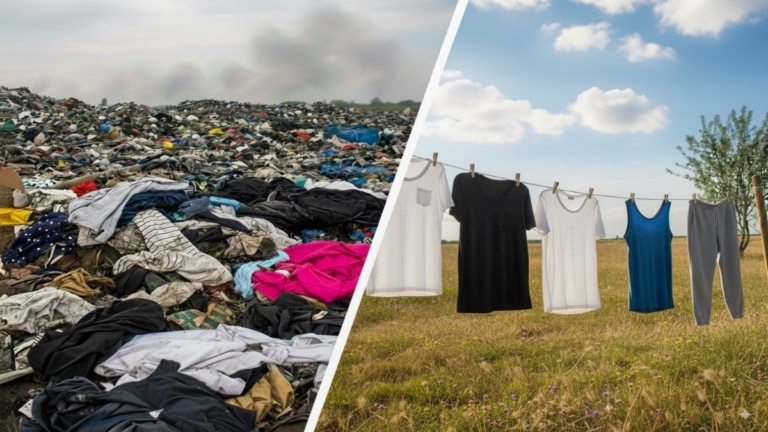
Unlike natural fibres, polyester cannot reintegrate into ecological systems. It doesn’t decompose — it persists.
Microplastics and Environmental Exposure
One of polyester’s most significant impacts happens during use.
Each wash releases microscopic plastic fibres into water systems. These particles accumulate in oceans, soil, and food chains — and once released, they don’t disappear.
This shifts the conversation beyond production into ongoing, invisible pollution — a factor often ignored in surface-level sustainability claims and closely tied to the broader lifecycle impacts discussed in the true cost of fast fashion.
Organic Cotton vs Polyester — Direct Comparison
| Organic Cotton | Polyester | |
|---|---|---|
Renewable, plant‑based |
Fossil‑fuel derived | |
Supports soil health |
Resource-extractive production | |
No synthetic pesticides |
Chemical-intensive manufacturing | |
Breathable and biodegradable |
Traps heat and sheds microplastics | |
Breaks down naturally |
Persists for decades or longer | |
Why Fibre Choice Shapes the Entire System
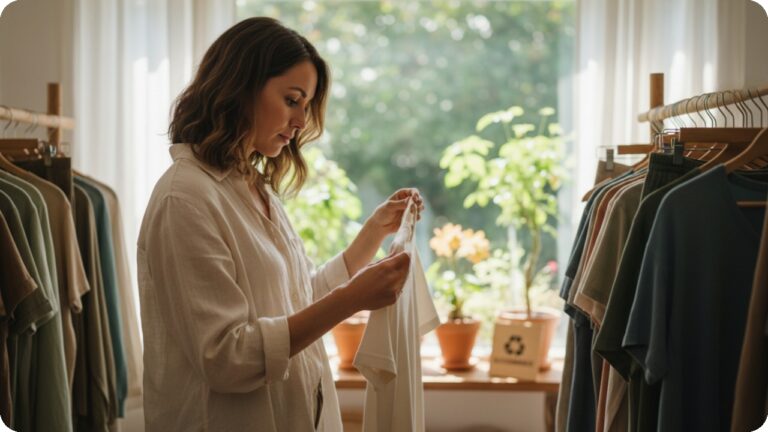
Fibre choice isn’t just a material decision — it sets the direction for everything that follows.
It determines how clothing is produced, how it performs, and how it impacts the environment long after it’s worn.
Natural fibres align more closely with:
- Regenerative or lower-impact agriculture
- Safer working conditions
- Biodegradability and circularity
Synthetic fibres prioritise scalability and cost efficiency — often at the expense of long-term environmental outcomes.
Understanding this difference also makes it easier to recognise misleading sustainability claims, especially when brands rely on partial truths — a key issue in greenwashing in fashion.
Building a More Considered Wardrobe

Changing fibre choices doesn’t require a complete reset.
A more practical approach is:
- Prioritising pieces you wear often
- Choosing materials that hold up over time
- Reducing reliance on synthetic-heavy blends
This naturally shifts consumption toward fewer, better garments — where durability and repeat wear matter more than volume.
That shift becomes more tangible when viewed through a cost-per-wear lens, where long-term value replaces short-term pricing.
For those looking to apply this in practice, starting with well-made organic cotton essentials can make the transition more practical without overhauling everything at once.
From Material Choice to System Change
Fibre choice is one of the earliest decisions in the lifecycle of a garment — but its impact extends all the way to the end.
Organic cotton doesn’t solve every problem. Polyester isn’t going anywhere overnight.
But the difference between them highlights something bigger:
How materials are chosen shapes how fashion behaves as a system.
And once you understand that system — from raw material to end-of-life — your decisions stop being passive.
They start becoming directional.
For brands working within this space, the goal isn’t perfection — it’s transparency, continuous improvement, and accountability, which sits at the core of how we approach ethical apparel.
Fibre choice isn’t just about what clothing is made from — it’s about what kind of system that clothing reinforces.
Organic Cotton vs Polyester FAQs
Is organic cotton always better than polyester?
In most cases, yes — particularly when certified and responsibly produced. Organic cotton avoids microplastic pollution and reduces chemical and environmental impact compared to polyester.
Does recycled polyester solve the problem?
It reduces reliance on virgin plastic but doesn’t eliminate microplastic shedding or end-of-life issues. It’s a partial improvement, not a complete solution.
Why is polyester still widely used?
Cost, durability, and scalability. Polyester is cheap to produce and easy to manufacture at scale, which makes it dominant in fast fashion systems.
Does fibre choice really make a difference?
Yes. Fibre choice influences environmental impact, garment lifespan, and what happens after disposal. It’s one of the most foundational decisions in clothing production.