The Real Cost Per Wear of Organic Clothing
(And Why Cheap Fashion Isn’t Actually Cheap)
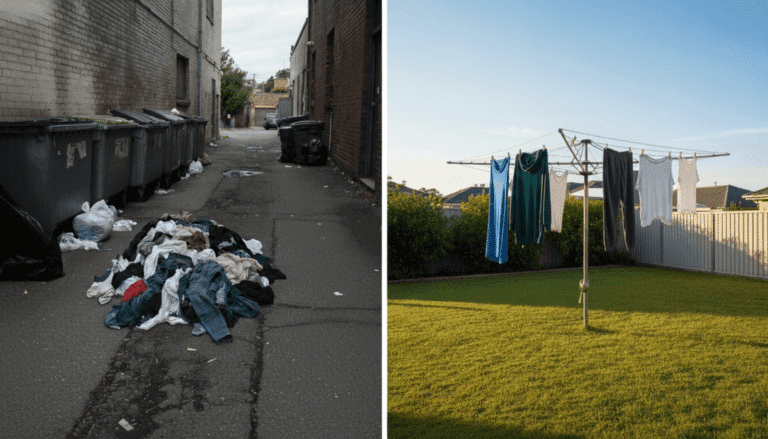
Why Upfront Price Tells an Incomplete Story
Price and value are not the same thing.
In clothing, the amount paid at checkout only captures the upfront transaction — not how long a garment lasts, how often it is worn, or how quickly it needs replacing.
This is where cost per wear becomes useful. Instead of judging clothing by sticker price alone, it evaluates value over the full lifespan of a garment.
Once viewed through this lens, cheap fashion often becomes far more expensive than it first appears.
Many of these hidden trade-offs — from environmental costs to production shortcuts — are explored further in the true cost of fast fashion.
What Cost Per Wear Actually Means
Cost per wear is a simple way to measure how efficiently a garment delivers value over time.
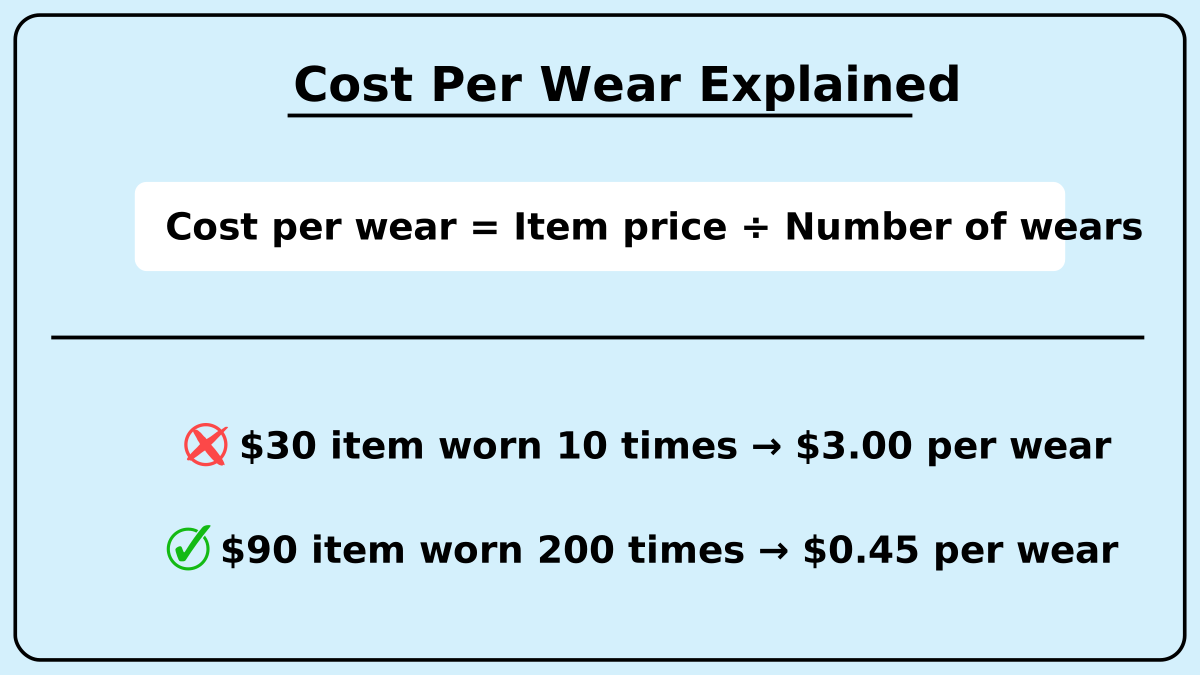
Viewed this way, a higher upfront price does not automatically mean a more expensive purchase.
It often means the opposite.
Cost per wear removes trend pressure, impulse logic, and marketing noise — replacing them with a more practical long-term metric.
Why Cheap Clothing Often Costs More Over Time
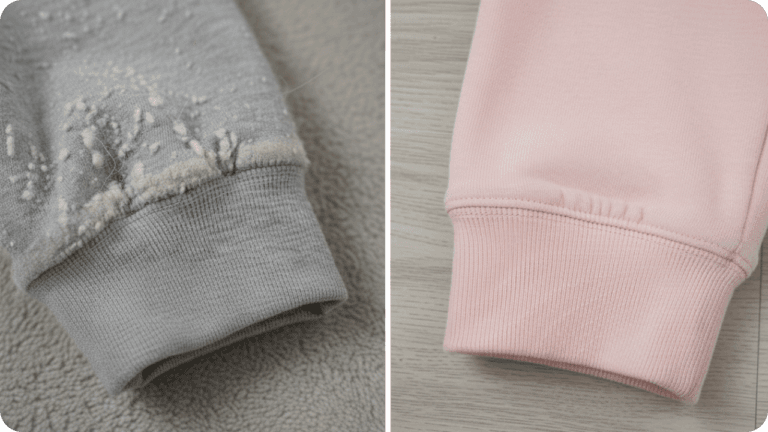
Low-cost garments are usually optimised for speed, volume, and margin — not durability.
To reduce production costs, fast fashion often relies on:
- Lower-quality synthetic fibres
- Lighter fabric weights
- Reduced stitching density
- Less durable garment finishing
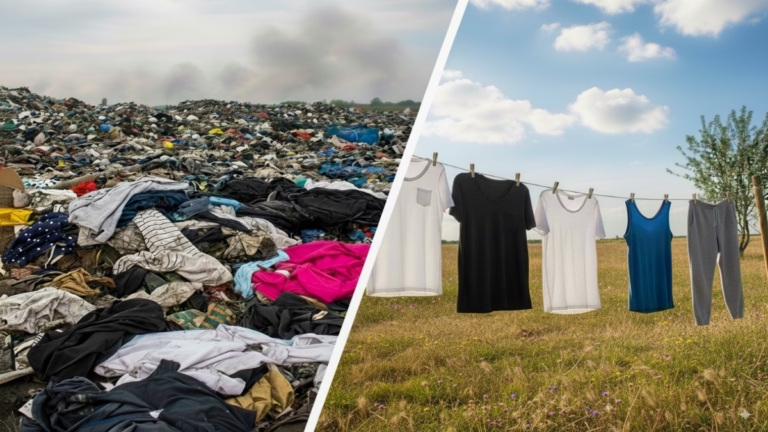
While these garments may appear functional at first, they often begin degrading quickly through stretching, pilling, seam distortion, odour retention, or shape loss after repeated washing.
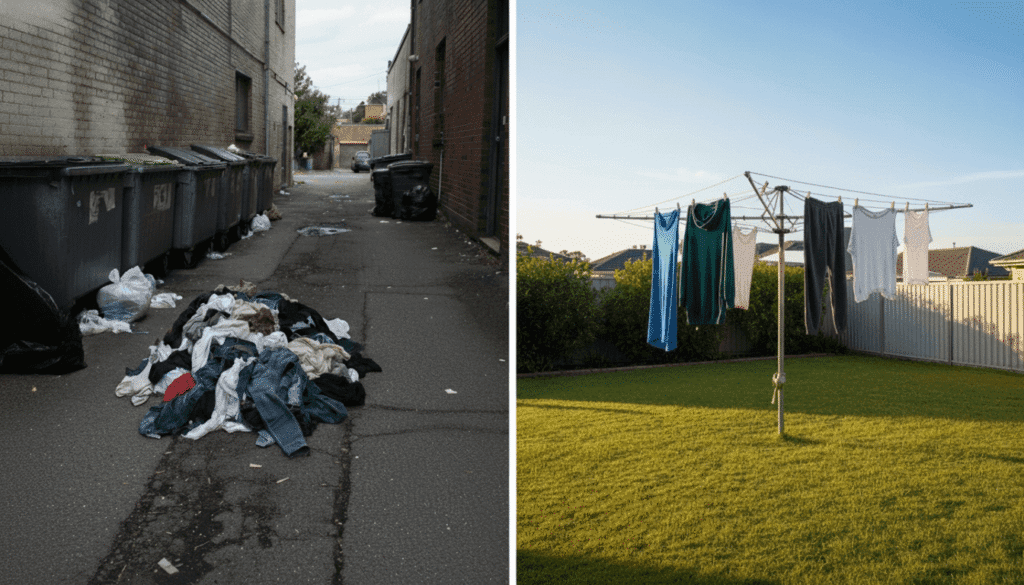
This creates a hidden replacement cycle: buy cheap, wear briefly, replace often.
Over time, this repeated spend can easily exceed the cost of a better-made garment purchased once.
Why Material Quality Changes the Equation
Not all fabrics behave the same over time.
Material selection has a major influence on how clothing wears, washes, breathes, and ages.
Synthetic-heavy garments are often associated with:
- Pilling and surface degradation
- Reduced breathability
- Odour retention
- Microplastic shedding
Natural fibres such as organic cotton are often preferred for everyday essentials because they are breathable, comfortable, and less reliant on petroleum-derived synthetics.
This difference in fibre behaviour plays a major role in long-term garment performance, as explored in organic cotton vs polyester explained.
What Ethical Clothing Actually Pays For

Higher prices in ethical clothing are not simply arbitrary markups.
They often reflect structural differences in how garments are produced.
This can include:
- Better-quality materials
- More durable construction
- Fairer labour standards
- Slower, more intentional production systems
- Lower replacement frequency over time
These decisions influence both product longevity and the broader systems behind a garment.
Our approach to fibre selection, production expectations, and transparency is outlined in our materials and standards.
This is also closely connected to how organic cotton supports ethical apparel through both material choice and production philosophy.
For shoppers specifically researching certification standards, labour expectations, and manufacturing accountability, our guide to fair wear clothing in Australia breaks this down further.
Fabric Lifecycle Comparison
| Fast Fashion / Synthetic Blend | Organic Cotton Essential | |
|---|---|---|
Fibre source |
Synthetic / chemically intensive |
Natural organic cotton fabric |
Fabric behaviour over time |
Pills, stretches, traps odours |
Breathable, softens with wear |
Wash durability |
Often declines quickly |
Better long-term wear potential |
Replacement frequency |
Higher |
Lower |
End of life |
Landfill / microplastic shedding |
Lower-impact natural fibre option |
Cost per wear trend |
Increases over time |
Decreases over time |
How to Lower Your Clothing Spend Long-Term
Lowering clothing spend is not always about buying the cheapest item available.
More often, it comes down to reducing replacement frequency and purchasing more intentionally.
A practical approach includes:
- Buying fewer, better-made essentials
- Prioritising frequently worn pieces
- Choosing natural fibres where practical
- Caring for garments properly
This approach is central to building a more sustainable wardrobe.
For those applying these principles in practice, starting with durable organic cotton essentials or value-focused clothing bundles can make the transition more practical without overhauling everything at once.
The Real Economics of Clothing
When clothing is measured by upfront price alone, cheap garments often appear to win.
But once durability, replacement frequency, and long-term performance are considered, the equation changes.
Cost per wear reveals which garments quietly justify their place in a wardrobe — and which ones demand repeated replacement.
The cheapest clothing is rarely the least expensive choice long term.
Price is immediate.
Value is cumulative.
FAQs — Cost Per Wear and Sustainable Fashion
What is cost per wear in clothing?
Cost per wear measures the effective value of a garment by dividing its purchase price by the number of times it is worn.
Why is cost per wear important?
Cost per wear helps shoppers evaluate long-term clothing value rather than focusing only on upfront price.
How do you calculate cost per wear?
To calculate cost per wear, divide the purchase price of a garment by the number of times you expect to wear it. For example, a $50 hoodie worn 50 times costs $1 per wear.
Is ethical clothing always more expensive?
Not necessarily over time. Ethical clothing may cost more upfront but can reduce replacement frequency and lower long-term clothing spend.
Why do basics matter most for cost per wear?
Essentials worn weekly usually deliver the highest number of wears, making durability especially important when evaluating value.
Are natural fibres better for long-term wear?
Natural fibres such as organic cotton are often preferred for everyday clothing because they are breathable, comfortable, and less reliant on synthetic blends.
Why can cheap clothing become more expensive?
Cheap clothing often wears out faster, requiring more frequent replacement and increasing overall spend over time.
Is organic cotton worth the higher price?
For many shoppers, organic cotton can offer better long-term value through comfort, durability, and lower replacement frequency, especially for frequently worn essentials.