The True Cost:
Fast Fashion vs Sustainable Fashion
in Australia
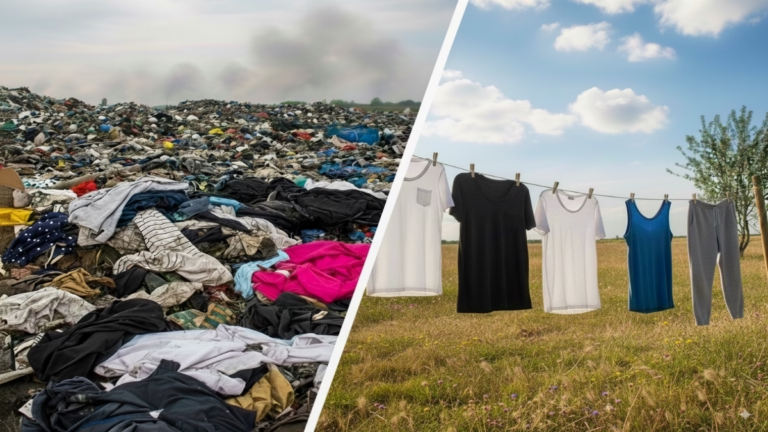
Fast fashion isn’t cheap.
It’s just designed to look that way.
The real cost is delayed, distributed, and mostly invisible — spread across the environment, supply chains, and the lifespan of the clothes themselves.
In Australia, as more people begin questioning where their clothing comes from, the conversation is shifting. Not just towards sustainable fashion in Australia, but towards understanding what that actually means in practice — something explored more broadly in Wearing the Change: Journey to Sustainable & Ethical Fashion in Australia.
Fast Fashion Isn’t About Clothing — It’s About Turnover
Fast fashion isn’t defined by price alone.
It’s defined by speed, volume, and disposability.
Garments are produced quickly, sold cheaply, and replaced just as fast.
Not because they’ve worn out — but because they were never designed to last in the first place.
That cycle creates a system where:
- Quality is secondary
- Longevity is optional
- Waste is inevitable
The Environmental Cost Isn’t One Thing — It’s Everything
Most breakdowns isolate one issue — water, carbon, waste.
In reality, it’s the combination that matters.
Water
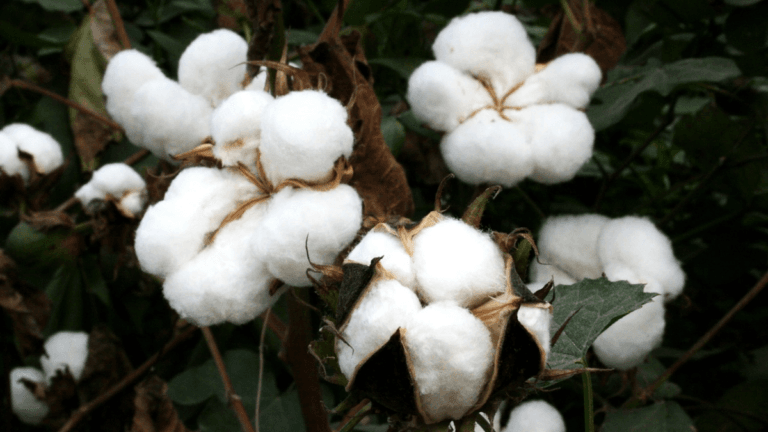
Conventional cotton production doesn’t just use large volumes of water — it often relies on intensive irrigation and chemical inputs that place pressure on already fragile ecosystems.
Understanding the full picture means looking beyond a single stat and considering how water, soil health, and emissions intersect — something broken down in detail within The Environmental Impact of Cotton in Australia.
Materials
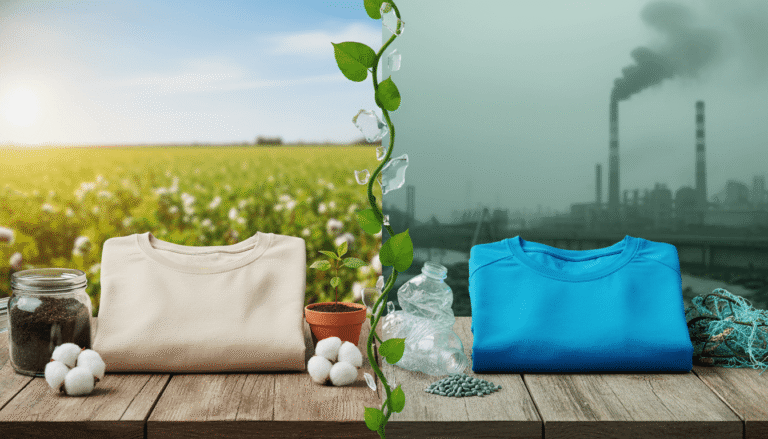
Synthetic fibres dominate fast fashion because they’re cheap, scalable, and consistent.
But that consistency comes at a cost — fossil fuel dependency, energy-intensive production, and microplastic shedding over time.
The difference becomes clearer when comparing material lifecycles directly, particularly in the context of organic vs polyester.
Waste
This is where the system becomes impossible to ignore.
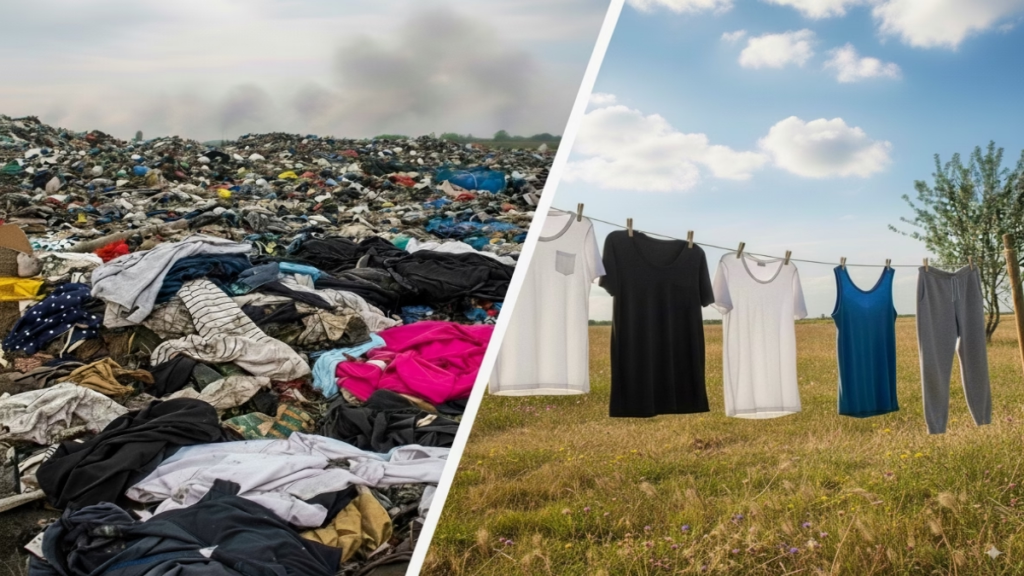
Clothing isn’t just being produced quickly — it’s being discarded just as fast.
In Australia alone, hundreds of thousands of tonnes of clothing end up in landfill each year.
Not because we need more clothes —
but because we’re sold more than we can realistically use.
The Human Cost Is Built Into the Price
Low prices don’t come from efficiency alone.
They come from cost being pushed somewhere else.
That often means:
- Wages that don’t reflect the cost of living
- Long hours under pressure to meet demand
- Limited visibility into working conditions
This isn’t a rare exception — it’s a structural feature of fast fashion supply chains.
So What Actually Changes With Sustainable Fashion?

Sustainable fashion isn’t about perfection — it’s about reducing harm in systems where harm has been normalised.
That includes better material choices, more controlled production, and greater accountability across the supply chain.
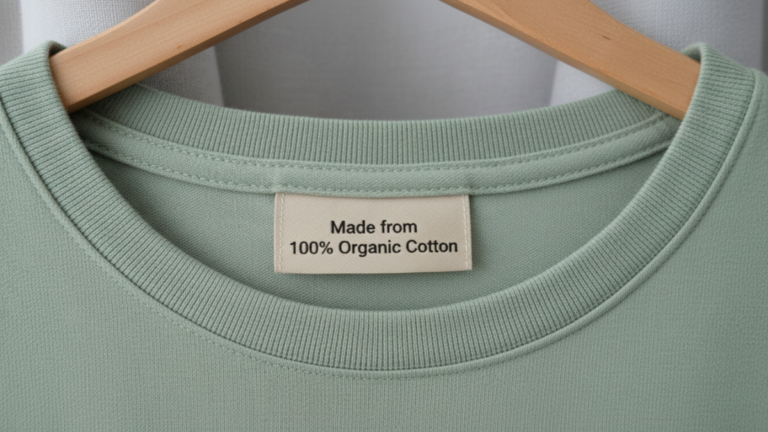
But not all claims are equal. Understanding the difference between meaningful standards and surface-level marketing is critical — especially when looking at what sits behind terms like ethical, sustainable, or eco-friendly.
This is where frameworks such as those explained in What Fair Trade, Climate Neutral & Vegan Clothing Really Mean in Australia become useful, alongside knowing how to avoid greenwashing in clothing.
Why It Costs More — And Why That’s Not the Full Story
Sustainable clothing often costs more upfront.
But that’s only part of the equation.
The more useful lens is:
How long does it actually last?
When garments are made with better materials and construction:
- They hold their shape longer
- They handle repeated wear
- They don’t need replacing as often
The more useful way to look at clothing isn’t just price — it’s longevity.
How often something is worn, how well it holds up, and whether it needs replacing all shape its real cost.
That’s where the concept of cost per wear becomes more meaningful than the initial price tag.
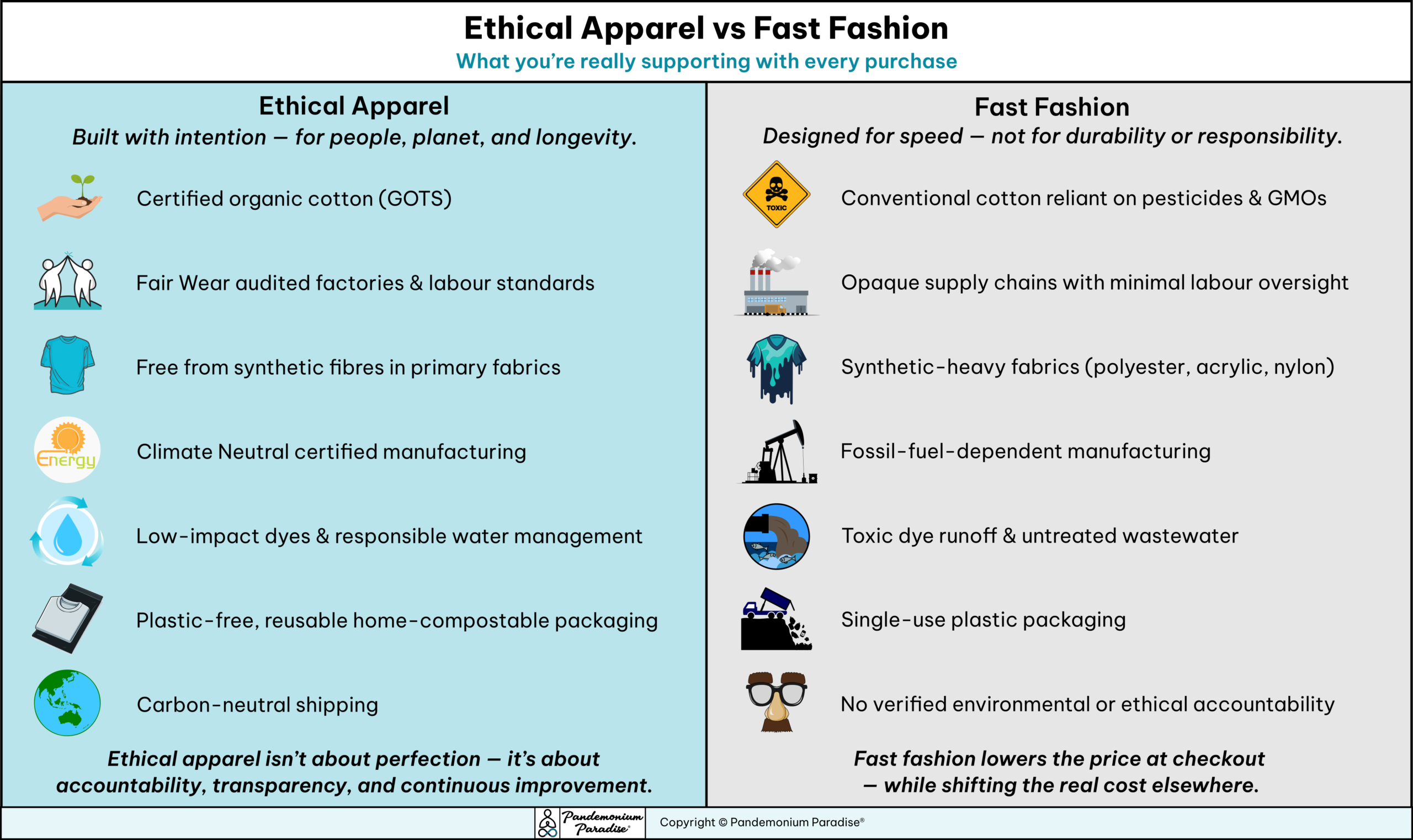
The Shift Happening in Australia
This isn’t a fringe conversation anymore.
More people are:
- Questioning where their clothes come from
- Looking beyond marketing claims
- Choosing fewer, better pieces
Not perfectly. Not all at once.
But consistently enough to shift expectations.
What Changes at a Personal Level
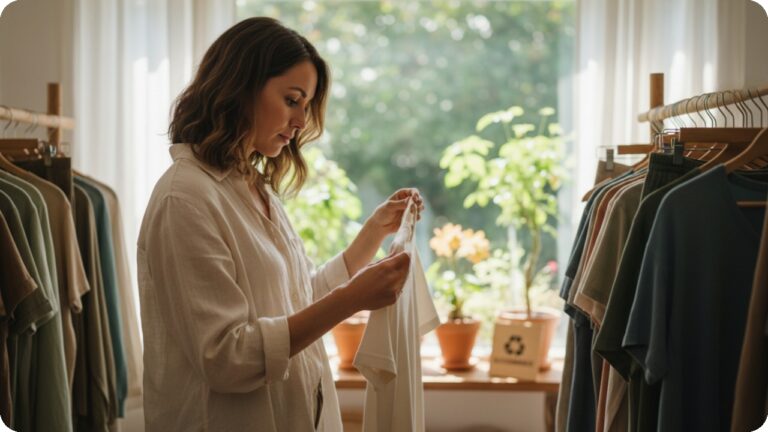
For most people, the shift doesn’t happen all at once.
It shows up in smaller decisions — choosing something you’ll wear often, keeping it longer, and being more selective about what gets added next.
Over time, that approach naturally leads toward a wardrobe built on fewer, better pieces — something explored more practically when looking at how to build a sustainable wardrobe in Australia.
The goal isn’t to overhaul everything overnight.
It’s to gradually move away from disposable choices.
The Real Difference
Fast fashion reduces cost by removing responsibility.
Sustainable fashion increases cost by accounting for it.
That’s the difference.
And once you see it, it’s hard to unsee.
Fast fashion lowers the price by overlooking the impact — sustainable fashion accounts for it. What we choose to wear decides which system continues.
Fast Fashion vs Sustainable Fashion FAQs
Why is fast fashion so cheap?
Fast fashion is inexpensive because it prioritises speed and scale over durability. Costs are reduced through lower-quality materials, high-volume production, and supply chains where wages and working conditions are often minimised.
Is sustainable fashion really more environmentally friendly?
Sustainable fashion generally reduces environmental impact by using lower-impact materials, limiting harmful chemicals, and producing garments designed to last longer. The overall footprint is smaller, especially when clothing is worn consistently over time.
How can Australians reduce their reliance on fast fashion?
Reducing reliance on fast fashion starts with buying less and choosing pieces that will be worn regularly. Keeping garments longer, avoiding trend-driven purchases, and being more selective with new additions all contribute to a more sustainable approach.
Where can I buy sustainable fashion in Australia?
Sustainable fashion in Australia is available through brands that prioritise transparency, responsible materials, and long-lasting design. Looking for clear information around how garments are made and what standards are followed is a good place to start.