Plastic-free Clothing in Australia: What It Really Means
The Expectation vs Reality
When people search for plastic-free clothing, the assumption is pretty straightforward:
no plastic, anywhere, in the entire garment.
That means no polyester, no synthetics, nothing hidden — just natural fibres from start to finish.
It sounds simple. Logical, even.
But once you look a little closer at how clothing is actually made, things start to shift.
Because in reality, “plastic-free” isn’t always as absolute as it sounds.
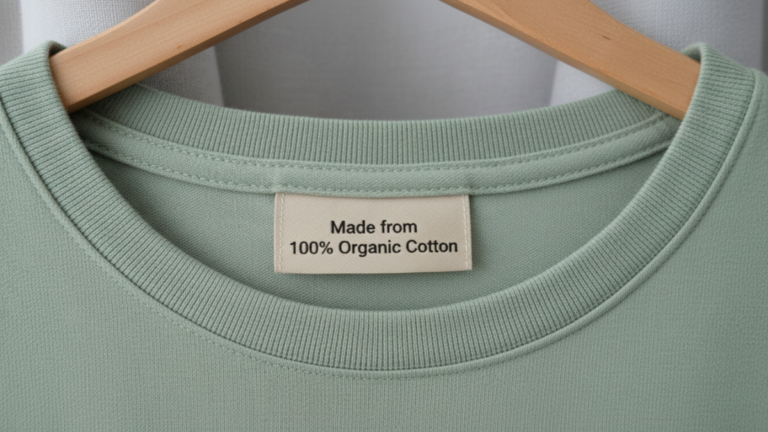
Even garments made from organic cotton — often considered the gold standard for natural fibres — can still include small synthetic components in places most people never think to check.
Not in the fabric itself.
But in the details.
- The stitching that holds everything together.
- The labels that stay readable after dozens of washes.
- The stretch in a waistband that keeps its shape over time.
These elements are rarely talked about, but they’re part of almost every modern garment — including many marketed as sustainable.
And this is where the gap begins.
Between what we expect plastic-free clothing to mean…
and what it actually looks like in practice.
This isn’t about calling brands out or discrediting sustainable efforts.
It’s about understanding the full picture — so you can make decisions based on clarity, not assumptions.
Where Plastic Actually Hides in Clothing

When most people think about plastic in clothing, they think of obvious materials like polyester or nylon.
But that’s only part of the story.
Even when a garment is made primarily from natural fibres like organic cotton, small synthetic components are often still used behind the scenes — not to cut corners, but to make the garment functional, durable, and wearable long-term.
Here’s where plastic tends to show up most often:
Stitching Thread
This is one of the least expected areas.
While the fabric itself might be 100% organic cotton, the thread used to stitch the garment together is often a polyester or cotton-poly blend.
Why?
Because it needs to be strong enough to handle tension, movement, and repeated washing without breaking down.
Fully cotton thread exists — but it generally doesn’t offer the same durability, especially in high-stress areas like seams.
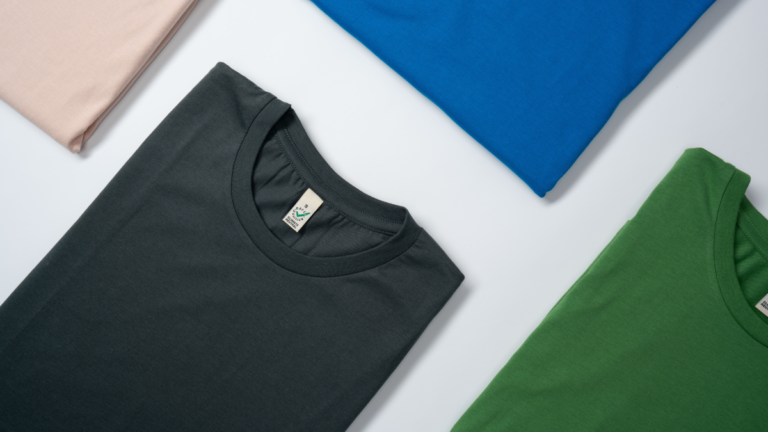
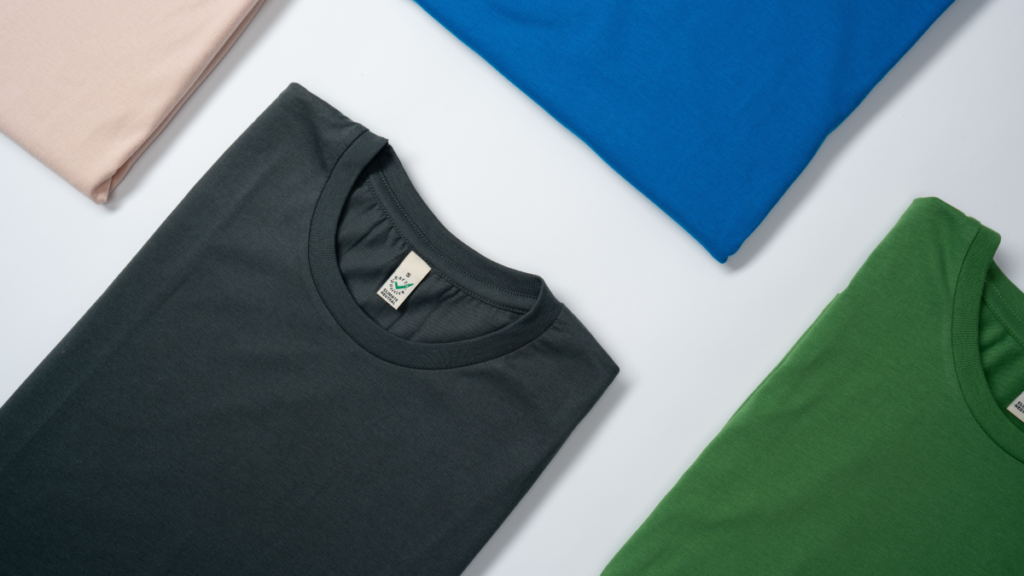
Neck Labels & Care Tags
Those small labels inside your clothing are almost always made from polyester or a synthetic blend.
That’s because they need to:
- stay legible after repeated washing
- resist fraying
- hold fine print clearly over time
Natural alternatives do exist, but they tend to fade, wear out faster, or lose clarity — which creates its own set of issues for longevity and usability.
Elastic Components (Waistbands, Cuffs, Stretch Areas)
Any garment with stretch — like sweatpants, hoodies, or cuffs — will usually include elastane or similar synthetic fibres.
This is what allows the fabric to:
- stretch comfortably
- return to its original shape
- maintain fit over time
Without it, the garment can quickly lose structure, becoming loose or misshapen after wear.
Trims & Finishing Details
Depending on the garment, smaller elements like:
- reinforcing tapes
- seam finishes
- hidden stabilisers
can also include synthetic materials.
These are rarely visible, but they play a role in how the garment holds up over time.
Packaging (Often Overlooked)
Even if the clothing itself is mostly natural, packaging is another place plastic often appears — from polybags to synthetic mailing materials.
This is one of the easier areas for brands to improve, but it’s still inconsistent across the industry.
Why This Matters
None of these components are usually highlighted on product pages.
Not because brands are trying to mislead — but because these details have become standard in modern garment production.
Still, if you’re specifically trying to avoid plastic, they’re worth knowing about.
Because once you understand where these materials are used, you can start to see why the idea of “100% plastic-free clothing” is more complex than it first appears.
So… Is Plastic-Free Clothing Actually Possible?
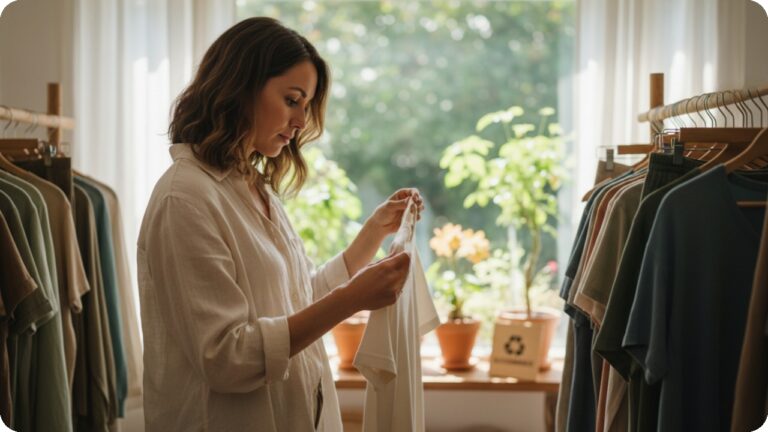
Short answer: yes — but with limitations.
Truly plastic-free clothing does exist.
Garments made entirely from natural fibres, stitched with cotton thread, finished without synthetic trims, and labelled using non-synthetic materials are possible.
But they’re rare.
And more importantly, they often come with trade-offs that aren’t always obvious at first.
The Trade-Offs Most People Don’t See
To remove plastic entirely from a garment, every single component needs to be reconsidered — not just the fabric.
That can affect things like:
- Durability — seams may not hold up as well over time
- Fit & structure — without elastane, stretch and recovery are limited
- Longevity of details — labels may fade or fray faster
- Comfort & practicality — certain finishes or reinforcements may be reduced
None of this makes plastic-free clothing bad.
But it does highlight something important:
there’s a balance between purity and performance.
It Also Depends on How You Define “Plastic-Free”
This is where things can get a bit blurry.
Some people define plastic-free as:
- no synthetic fibres in the fabric itself
Others take a stricter view:
- absolutely no plastic in any part of the garment, including threads, labels, and trims
Neither approach is wrong.
But they lead to very different expectations — and very different products.
So Where Does That Leave You?
Somewhere more informed than before.
Because instead of chasing a label that sounds perfect on paper, you’re now looking at what actually goes into a garment — and why.
And that’s where better decisions come from.
Not from perfection.
But from understanding the trade-offs, and choosing what matters most to you.
What We Do Differently (and Why It Matters)

Once you understand how clothing is actually made, the goal shifts slightly.
It’s no longer about chasing a perfect label.
It’s about making better, more informed choices — both as a brand, and as a customer.
That’s the approach we focus on.
Starting With What Matters Most
The biggest impact comes from the fabric itself.
That’s why we focus on garments made from organic cotton, avoiding synthetic fibres like polyester or nylon in the main material.
This significantly reduces the amount of plastic in the clothing — even if it doesn’t eliminate it entirely.
Reducing Plastic Where It’s Possible
Beyond the fabric, we aim to minimise plastic use in the areas where there’s more flexibility.
That includes:
- Avoiding unnecessary synthetic blends in the garment itself
- Keeping designs simple, so fewer trims and components are needed
- Choosing plastic-free packaging, so your order arrives without the usual waste
These choices don’t make a garment perfectly plastic-free.
But they do move things in the right direction.
Being Honest About What Isn’t
Some elements — like stitching thread, labels, or elastic components — still rely on synthetic materials for durability and performance.
Instead of avoiding that conversation, we believe it’s better to be upfront about it.
Because knowing where plastic is used matters just as much as knowing where it isn’t.
Why This Approach Matters
There’s a tendency in fashion to present things as all-or-nothing.
Completely sustainable. Completely plastic-free. Completely ethical.
But the reality is more nuanced than that.
And in our view, transparency is more valuable than perfection.
Because when you understand what you’re buying — and why it’s made that way — you’re in a much better position to decide what aligns with your values.
How to Make Better Choices as a Shopper

Once you understand where plastic shows up in clothing, the question becomes:
what should you actually do with that information?
Because trying to avoid it completely can feel overwhelming — and in some cases, unrealistic.
The good news is, you don’t need to be perfect to make a meaningful difference.
You just need to know where your choices have the most impact.
Focus on the Fabric First
If there’s one place to prioritise, it’s the main material of the garment.
Look for:
- Natural fibres like organic cotton
- Minimal or no synthetic blends in the fabric itself
This is where the majority of plastic content typically comes from — so changing this one factor already makes a significant difference.
Don’t Get Caught Up in the Smallest Details
It’s easy to go down the rabbit hole of trying to eliminate every trace of plastic.
But things like stitching thread, labels, and internal components are:
- harder to avoid
- often necessary for durability
- a much smaller part of the overall material makeup
Being aware of them is valuable.
But stressing over them isn’t always the most practical place to focus your energy.
Pay Attention to Packaging
This is one of the simplest wins.
Look for brands that:
- ship plastic-free
- use recyclable or compostable materials
- minimise unnecessary packaging
Unlike garment construction, this is an area where change is more straightforward — and where your choices can directly support better practices.
Be Cautious of Absolute Claims
Terms like “100% plastic-free” can sound reassuring.
But as you’ve seen, they’re not always as clear-cut as they appear.
Instead of relying on labels alone, it helps to look for brands that:
- explain their materials openly
- acknowledge limitations
- prioritise transparency over perfection
That’s usually a stronger signal than any single claim.
Decide What Matters Most to You
At the end of the day, there’s no single “perfect” standard.
For some people, avoiding synthetic fibres in the fabric is enough.
For others, the goal might be reducing plastic wherever possible — even in smaller components.
Both approaches are valid.
What matters is that your decisions are based on clear information, not assumptions.
Final Takeaway
“Plastic-free clothing” sounds like a clear-cut idea.
But in reality, it’s more nuanced than most people realise.
While natural fibres like organic cotton can significantly reduce plastic use, small synthetic components are still common in areas like stitching, labels, and stretch elements — not to mislead, but to make garments durable, functional, and long-lasting.
And that doesn’t cancel out the progress being made.
It just adds context.
Because the goal isn’t perfection.
It’s better choices, made with clearer information.
Choosing clothing with natural fibres.
Supporting brands that are open about their materials.
Reducing plastic where it’s realistically possible.
That’s where real impact happens.
Not in chasing an ideal that’s hard to achieve —
but in understanding the details, and deciding what matters most to you.
FAQs
Is plastic-free clothing really possible?
Plastic-free clothing is possible, but it’s rare. While garments can be made entirely from natural fibres, many still include small synthetic components like stitching thread, labels, or elastic for durability and performance.
Does organic cotton clothing contain plastic?
Organic cotton fabric itself does not contain plastic. However, some garments made from organic cotton may still include synthetic elements in areas like stitching, trims, or labels.
What clothing materials are plastic-free?
Natural fibres such as organic cotton, linen, hemp, and wool are considered plastic-free. However, fully plastic-free garments depend on all components — not just the fabric.
Is sustainable clothing the same as plastic-free clothing?
Not always. Sustainable clothing focuses on environmental and ethical impact, while plastic-free clothing refers specifically to avoiding synthetic materials. A garment can be sustainable without being completely plastic-free.
Where is plastic most commonly found in clothing?
Plastic is often found in stitching thread, labels, elastic components, trims, and sometimes packaging — even in garments made primarily from natural fibres.