
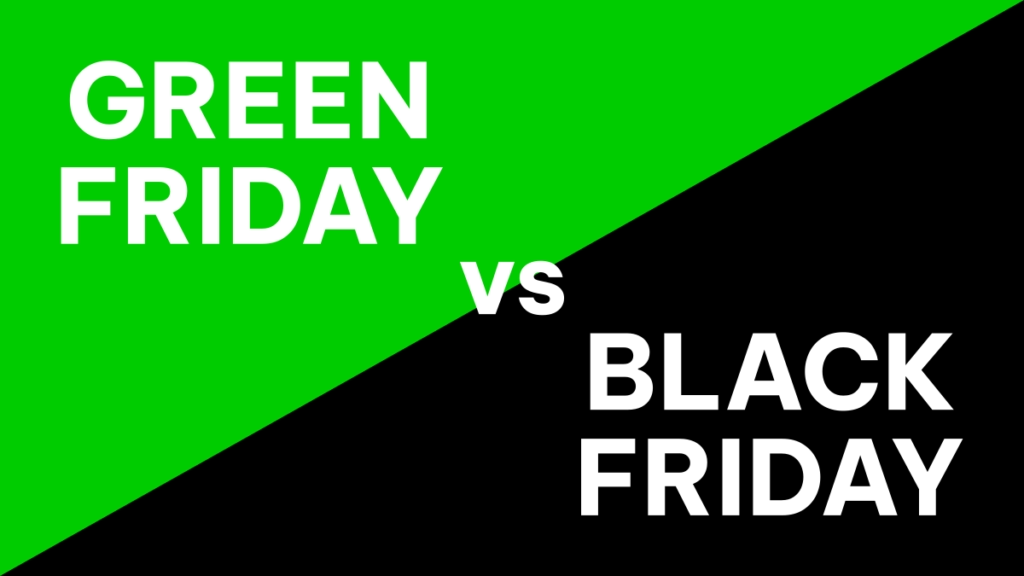
Green Friday vs Black Friday: A Comparison Guide for the Conscious Consumer
Why This Comparison Matters
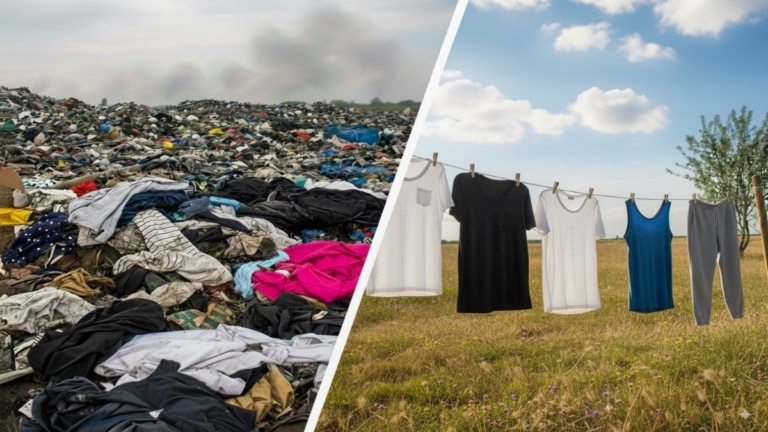
Black Friday has become synonymous with deep discounts, retail urgency, and an almost ritualised culture of overconsumption. In contrast, Green Friday is a growing ethical movement urging shoppers to slow down, choose intentionally, and support transparent, certified, sustainability-first brands. As global waste levels rise — with textiles now one of the fastest-growing waste streams (see UNEP’s textile waste research) — understanding the difference between these two events matters more than ever.
What Is Black Friday?
Black Friday began as a U.S. post-Thanksgiving sales event and evolved into an international shopping phenomenon. While deals can be tempting, the drawbacks are significant:
Increased overproduction and textile waste
Intense pressure on ecosystems due to fast, high-volume purchasing
Shortened production timelines that can compromise labour standards
To understand how discount-driven cycles negatively impact workers and the planet, see:
👉 The True Cost of Fast Fashion vs Sustainable Fashion in Australia
Global supply chain data aligns with this too. Independent bodies like Fair Wear Foundation and Fairtrade International report that cost-cutting in peak seasons often leads to unsafe working conditions and below-livable wages.
What is Green Friday?
Green Friday flips the message entirely: buy less, buy better, and support brands that can prove their ethics — not just claim them.
Key Green Friday behaviours include:
Choosing certified organic or Fair Trade products
Investing in one durable, high-quality item instead of multiple low-cost replacements
Supporting brands with transparent reporting, independent certifications, and circularity initiatives
Opting for reuse, repair, and mindful consumption over impulse purchasing
For practical wardrobe steps that align with Green Friday principles, see:
👉 How to Build a Sustainable Wardrobe in Australia
The movement is also championed by NGOs such as Greenpeace, who highlight the need to resist fast-fashion-driven overconsumption.
Environmental impact — quick comparison
Black Friday
This event often triggers compressed manufacturing timelines, express shipping, elevated energy use and heavy packaging — all of which compound the environmental footprint of fast seasonal shopping.
Textile-related pollution is also a growing concern: microfibres shed from synthetic clothing are now recognised as a major source of global microplastic contamination, highlighted by international reviews such as the UN Environment Programme’s report on microplastics. Scientific monitoring has found these microfibres in significant concentrations across marine environments, as shown in CSIRO-published research.
In Australia, the waste impact is substantial — with hundreds of thousands of tonnes of clothing entering landfill annually, according to Clean Up Australia’s textile waste findings — underscoring how high-volume sale events can intensify the problem.
Green Friday
Green Friday supports slower, lower-impact purchasing — prioritising durable goods, certified materials including GOTS-accredited organic cotton, circular models, and long-term use.
To understand the lifecycle differences between conventional and organic fibres, see:
👉 The Environmental Impact of Cotton: Conventional vs Organic
Labour standards & supply chains
Black Friday’s “rush to produce” can intensify labour exploitation. Tight turnaround times and unrealistic pricing frequently pressure suppliers into unsafe working conditions and inadequate pay structures.
Green Friday instead encourages support for brands that:
Partner with Fair Trade or verified ethical factories
Publish supply chain transparency statements
Submit to third-party labour audits (such as Fair Wear)
- Use certifications that verify social responsibility, not just environmental claims
For more on what these certifications actually guarantee, see:
👉 What Fair Trade, Climate Neutral & Vegan Clothing Really Mean in Australia
The buyer’s checklist — shopping the Green Friday way
When comparing a high-discount Black Friday offer with a Green Friday alternative, ask yourself:
Is the item GOTS or OEKO-TEX® certified?
(See: OEKO-TEX® Standard 100)Does the brand publish supply chain info, Fair Trade certification, or independent audits?
Is this purchase durable, repairable, and genuinely needed?
Does the brand offer circularity initiatives (repairs, recycling, take-back programs)?
For suggestions on what to buy ethically, explore:
👉 How Organic Cotton Clothing Supports Ethical Apparel in Australia
How brands can act responsibly (and how to spot greenwashing)
Brands authentically participating in the Green Friday movement will:
Provide recognised certifications (GOTS, OEKO-TEX®, Fair Trade)
Use climate-neutral shipping or adopt certified carbon-accounting frameworks like Climate Neutral
Publish detailed sustainability reports
Offer repair, return, or take-back programs
Avoid vague, unverified environmental claims
Greenwashing red flags include:
“Eco-friendly” with no certification
Unverifiable carbon offset claims
Lack of supply chain transparency
No third-party verification at any stage
For a deeper look into the consequences of poor-quality, disposable fashion, revisit:
👉 The True Cost of Fast Fashion vs Sustainable Fashion in Australia
Brands should also follow the guidance of consumer protection authorities when making environmental claims. For example, the Australian Competition and Consumer Commission (ACCC) provides standards on avoiding misleading “eco-friendly” claims, helping ensure transparency and consumer trust.
At Pandemonium Paradise, we aim to lead by example in supporting ethical and sustainable practices. From stocking only certified organic and Fair Trade apparel to maintaining transparent supply chains, we ensure every item aligns with the principles of Green Friday. Discover our full range of products in our ethical clothing collection or learn more about our sustainable store to see how we’re making a difference in Australian fashion.
Practical consumer actions for Green Friday
Here are four simple, high-impact steps:
Plan purchases in advance — avoid impulse buying.
Prioritise certified products (GOTS, Fair Trade, OEKO-TEX®).
Choose repair, secondhand or rental options to reduce demand for new production.
Support environmental charities or brands that give back, especially those with transparent donation tracking.
To bring these steps into daily wardrobe choices, see:
👉 How to Build a Sustainable Wardrobe in Australia
Consider using local community resources to extend the life of clothing. Initiatives like Repair Café allow consumers to repair garments instead of replacing them, supporting a circular approach that aligns with Green Friday principles.
FAQs About Green Friday vs Black Friday
What is Green Friday?
Green Friday is an ethical alternative to Black Friday that emphasises reduced consumption, certified and durable goods, repair and reuse, and support for transparent brands and environmental initiatives.
Is Green Friday More Expensive?
Not necessarily. While sustainable goods might not match ultra-cheap fast fashion pricing, cost-per-wear, durability, and quality are dramatically higher.
A $39 organic cotton tee worn 100 times costs 39 cents per wear.
A $15 polyester fast-fashion tee worn 5–8 times can cost $2–$3 per wear — plus the environmental damage.
Green Friday reframes value.
Is it OK to buy on Black Friday if I need something?
Yes — if the product is durable, certified, and meets your needs (not impulse), a well-researched Black Friday purchase can make sense. Prioritise certified products and brands with transparent supply chains.
How can I tell if a Green Friday product is genuinely sustainable?
Look for third-party certifications such as GOTS, OEKO-TEX®, Fair Trade or Climate Neutral verification, and check that the brand publishes supply chain transparency or third-party audits.
Will buying certified products on sale still support ethical practices?
Yes — discounts on certified products keep revenue flowing to ethical supply chains and encourage consumers to choose durable, verifiable items over disposable alternatives.
Micro Decisions, Macro Impact
Black Friday and Green Friday offer two opposing approaches to consumption. One drives volume; the other encourages intention. By choosing certified, durable, and ethically made pieces, shoppers can reduce environmental impact, strengthen fair supply chains, and reshape the fashion industry — one thoughtful purchase at a time.
Even small, considered choices during high-sale periods — choosing certified, repairable and longer-lasting clothing — add up to major positive impact across supply chains and ecosystems.