
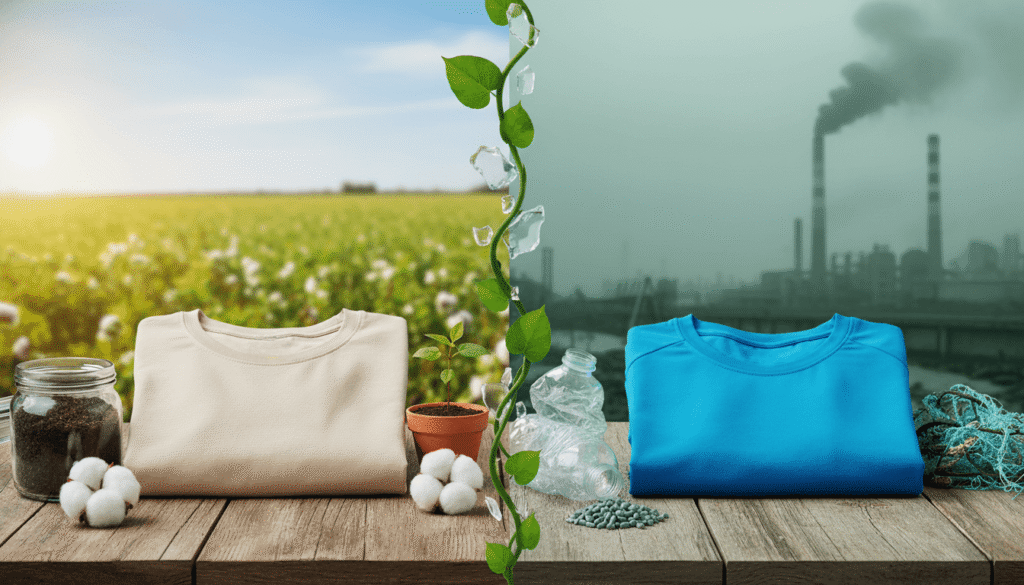
Why Natural Fibres Matter: Organic Cotton vs Polyester Explained
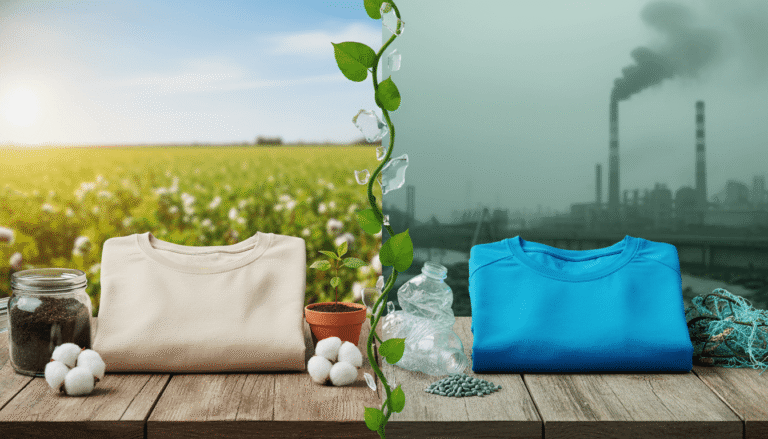
What Are Natural Fibres — and Why Do They Matter?
Natural fibres are materials derived from plants or animals, such as cotton, linen, hemp, and wool. Unlike synthetic fibres, they are part of natural biological cycles and break down safely when their useful life ends.
In the context of ethical apparel in Australia, fibre choice is one of the most important — and most misunderstood — decisions in sustainable fashion. While labels often focus on style or price, the fibre inside a garment determines how it interacts with the environment, your skin, and the global textile system.
For a broader overview of how fibre choice fits into ethical fashion, see Wearing the Change: A Guide to Ethical and Sustainable Fashion in Australia.
Organic Cotton Explained — From Soil to Shirt
Organic cotton is grown without synthetic pesticides, insecticides, or genetically modified seeds. It relies on regenerative farming practices that protect ecosystems, farmers, and surrounding communities.
Environmental Impact of Organic Cotton
Organic cotton farming:
Uses significantly less water than conventional cotton when grown in rain-fed systems, particularly in regions that rely primarily on rainfall rather than irrigation (Textile Exchange – Organic Cotton)
Improves soil health and biodiversity
Prevents toxic runoff into waterways
According to Textile Exchange, organic cotton cultivation reduces greenhouse gas emissions by up to 46% compared to conventional cotton, largely due to the absence of synthetic fertilisers and improved soil carbon retention.
Human Health and Ethical Benefits
Organic cotton protects farmers from chemical exposure and supports safer working conditions across the supply chain — a core principle of ethical apparel in Australia.
Learn more about how fibre choice supports workers and communities in How Organic Cotton Clothing Supports Ethical Apparel in Australia.
Polyester Explained — Synthetic Convenience with Hidden Costs
Polyester is a synthetic fibre derived from petroleum through an energy‑intensive chemical process that converts fossil fuels into plastic polymers. While often marketed as durable and low‑maintenance, polyester fundamentally behaves like plastic at every stage of its life — from production to disposal.
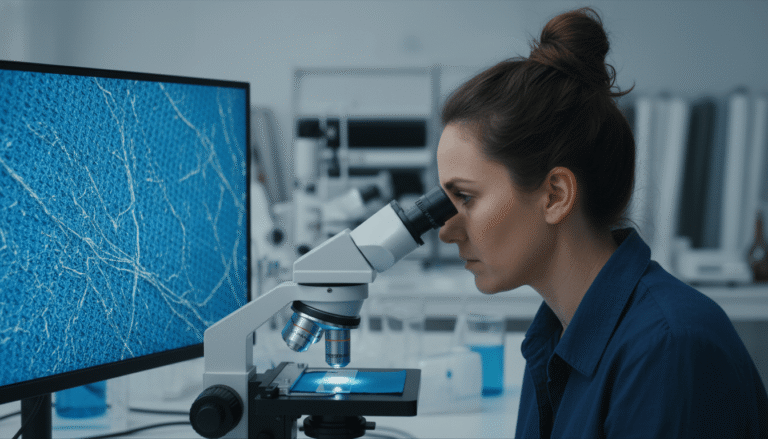
How Polyester Is Made (The Chemistry Behind the Fabric)
Polyester is produced by polymerising petrochemicals such as ethylene glycol and terephthalic acid at extremely high temperatures. This process:
Requires large amounts of energy and fossil fuel input
Emits greenhouse gases at every production stage
Creates a material that cannot safely re‑enter natural biological systems
Unlike natural fibres, polyester does not biodegrade. Instead, it fragments into smaller and smaller plastic particles over time.
Carbon Emissions and Climate Impact
The United Nations Environment Programme identifies synthetic textiles as a rapidly growing contributor to climate change, driven primarily by polyester’s fossil-fuel dependence and energy-intensive production processes. The production of polyester generates significantly higher lifecycle emissions than natural fibres due to its reliance on fossil fuels, high‑heat manufacturing, and globalised shipping networks.
Microplastics, Waterways, and Human Exposure
Every wash of a polyester garment releases thousands of microplastic fibres into wastewater systems. Research by CSIRO confirms these fibres are now present throughout Australian waterways, marine ecosystems, and food chains, contributing to long-term ecological and human exposure risks.
These microplastics do not disappear — they accumulate in soil, water, wildlife, and potentially human bodies, creating long‑term environmental and health risks that synthetic fibre marketing rarely acknowledges.
This issue is explored further in The Environmental Impact of Cotton: Conventional vs Organic.
Organic Cotton vs Polyester — A Side-by-Side Comparison
| Organic Cotton | Polyester | |
|---|---|---|
Renewable, plant‑based fibre |
Fossil‑fuel derived plastic | |
Grown without toxic pesticides |
High‑emission manufacturing | |
Breathable and skin‑safe |
Traps heat and moisture | |
Biodegradable at end of life |
Sheds microplastics when washed | |
Integrates into natural soil cycles |
Persists in landfill for centuries | |
Why Fibre Choice Matters for Ethical Apparel in Australia
Ethical apparel isn’t defined by a single label — it’s built through transparent decisions at every stage of production. Fibre choice sits at the foundation of that process.
“Fibre choice determines not just how clothing wears — but how it pollutes, degrades, and ultimately returns to the environment.”
Brands committed to ethical apparel in Australia prioritise natural fibres like organic cotton because they align with:
Fair labour standards
Environmental responsibility
Long-term garment durability
To understand how certifications support these claims, read What Fair Trade, Climate Neutral & Vegan Clothing Really Mean in Australia.
For insight into how material choice connects to misleading sustainability claims, see How to Avoid Greenwashing When Shopping for Clothing in Australia.
Building a Sustainable Wardrobe with Natural Fibres
If you’re starting to rethink your wardrobe:
Choose organic cotton basics you’ll wear weekly
Avoid blends dominated by synthetic fibres
Care for garments properly to extend lifespan
For a step-by-step approach, explore How to Build a Sustainable Wardrobe in Australia or browse our organic cotton essentials.
FAQs — Natural Fibres and Sustainable Fashion
Is organic cotton always better than polyester?
Organic cotton has a lower environmental and health impact when certified and responsibly produced, especially compared to virgin polyester.
While polyester may seem cheaper at checkout, durability and wearability matter — especially when you look at cost per wear over time rather than just the initial price.
Does recycled polyester solve the problem?
Recycled polyester reduces reliance on virgin fossil fuels and diverts plastic waste from landfill, but it does not eliminate the core problems of synthetic fibres.
Studies have shown that recycled polyester can shed microplastics at equal or higher rates than virgin polyester due to shorter, weaker fibre lengths created during the recycling process. These fibres are released during washing, enter waterways, and persist indefinitely in ecosystems.
In other words, recycled polyester may slow waste creation — but it does not stop microplastic pollution or create a safe end‑of‑life pathway.
Why do ethical brands avoid polyester?
Because true sustainability considers end-of-life, pollution, and human impact — not just durability.
Understanding fibre science changes the way we see clothing. When we trace materials from extraction through wear and disposal, it becomes clear that fabric choice is not cosmetic — it is structural. Natural fibres operate within ecological limits. Synthetic fibres do not.
Once you understand how synthetic fibres are made, worn, washed, and discarded, choosing polyester is no longer a neutral decision — it’s an informed one.